guides
Hotel Shoe Shine Kit: Three Products, One Name
UMYAN · Sep 2, 2026
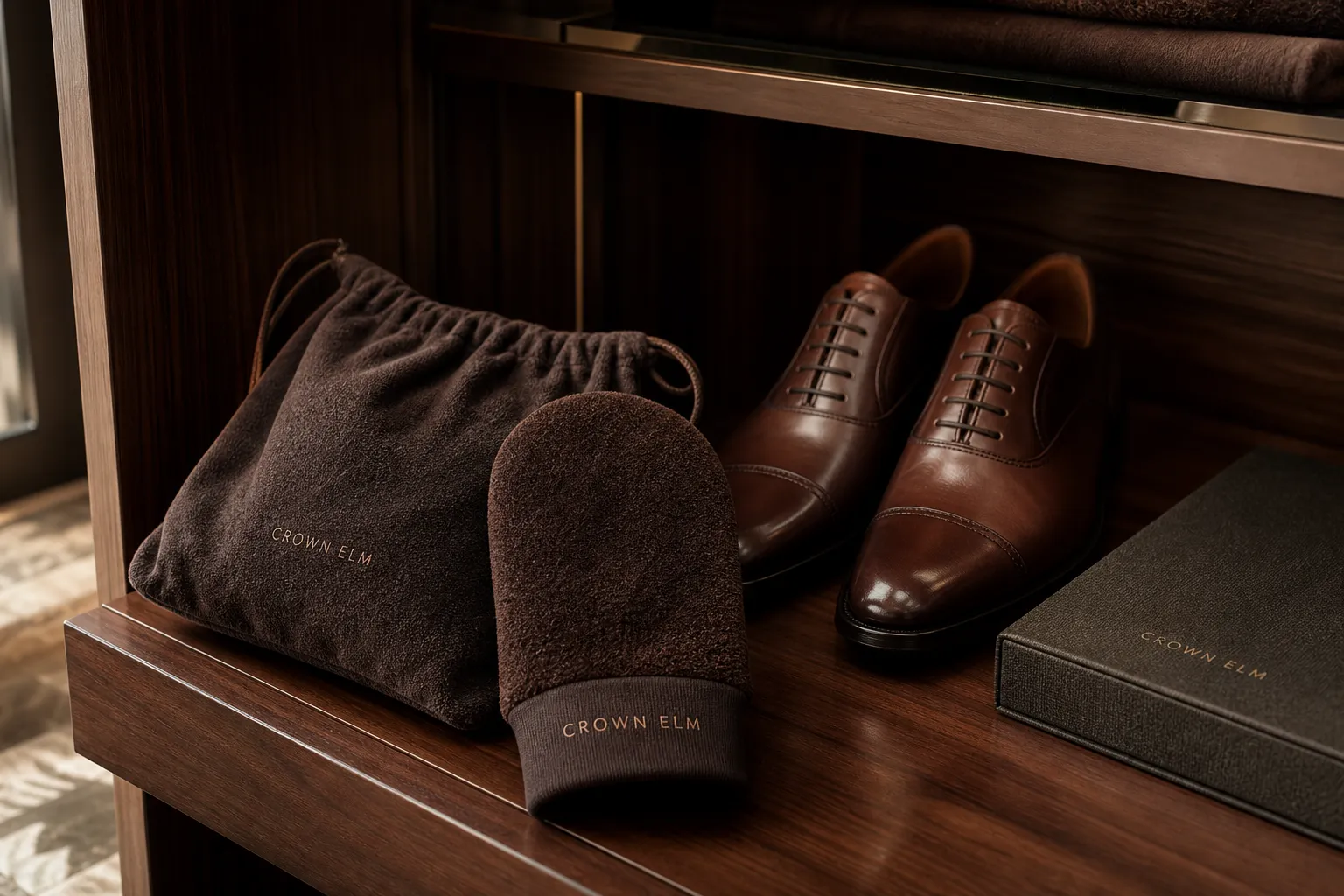
Two suppliers quote you a “hotel shoe shine kit.” One comes back at a fraction of the other, and the buyer’s first instinct is that somebody is either gouging or cutting corners. Usually neither is true. They have quoted different products.
“Shoe shine kit” covers three things in this market: a shine sponge, a shine mitt, and a boxed set with polish and an applicator. They are wrapped differently, they cost differently, and they belong in different rooms. Until the tender line says which one you mean, you are not comparing quotes — you are comparing categories.
What’s actually sold under the name
| Format | What it is | Typical wrap | Relative cost |
|---|---|---|---|
| Shine sponge | A small sponge pad, sometimes with a rubber or silicone top face to keep the guest’s hand clean | Flowpack sachet, or a small card box | Lowest |
| Shine mitt | A cotton glove, generally supplied pre-loaded with polishing agent | Individually wrapped, sleeve or sachet | Middle |
| Boxed shine kit | Polish plus a separate applicator, boxed | Card box or paper wrap | Highest |
The mitt is the one that most often hides inside a “kit” listing. We have seen supplier category pages titled shoe shine kits where every item on the page turns out to be a mitt. No polish tin, no applicator, no box. That is not deception, it is the market using one name loosely, and it is still your problem when you are reading two quotes side by side.
The spread between them is not a few percent. A mitt is several times the unit cost of a sponge, and a boxed set sits above both — though it’s worth noting that the boxed-kit pages we looked at publish no unit price at all, which tells you something on its own. That makes shoe care unusual among dry goods: on most amenity lines the format decision nudges the price. Here it decides it.
Which one to spec
The mitt is the right default for most properties. It does the job in one movement, there is nothing for the guest to open or decant, and it leaves no residue on a hand or a cuff. It is also the format that reads as deliberate rather than cheap when it’s sitting in an open wardrobe.
The sponge is the volume answer. Where the room count is large, the stay is short, and the shoe-care line has to justify itself against everything else in the wardrobe, the sponge does the same job for less. It is the format we pair with a decent pen for city business hotels — two small items that get used, against a long list of items that don’t.
The boxed kit is a tier decision, not a performance one. Polish plus applicator doesn’t shine a shoe better than a pre-loaded mitt in the thirty seconds a guest actually spends on it. What it does is look like a considered object on a shelf in a suite. Buy it for that reason or don’t buy it.
One spec point that survives all three formats: the polish should be neutral. Colourless polish is the usual supply for exactly the reason you’d expect — a guest reaches for it at speed, on whatever shoes they packed, and a tinted polish on the wrong leather is a complaint rather than an amenity. If a quote doesn’t state the shade, ask before you sample.
And a format we’d steer you away from in the guest room: anything the guest has to open and pour. A tin, a bottle, a dauber with a separate cap. The failure mode is not the guest’s shoes; it’s the carpet.
In the room or held at the desk
Shoe care sits in that awkward middle group of amenities that can defensibly go either way, and we’ll be straight about the evidence here: we can tell you how the operational logic runs, but we can’t tell you what the industry split actually is. We’ve never seen a credible figure for it, and we’re not going to invent one.
The reasoning that we’d act on:
Place it if it’s a sponge or a mitt. Both are single-stay consumables, cheap enough that unused units are not a meaningful line, and both are useless to a guest who never learns they exist. An amenity held at reception is an amenity most guests never ask for. That is fine when the item is expensive or hazardous — the argument that keeps a shaving kit behind the desk in some properties — and it is simply waste avoidance solving the wrong problem when the item costs almost nothing.
Consider holding the boxed set. Higher unit cost, and it isn’t consumed in a single use, so a placed one in a room where nobody polishes anything is a genuine loss rather than a rounding error.
Where it goes in the room matters more than most buyers expect. The wardrobe, not the bathroom. It sits with the shoes and next to the shoe bag and the laundry bag, and it should visually match them. A mismatched trio on a wardrobe shelf reads as cheap without the guest being able to say why — the same small failure that a mismatched laundry bag causes, for the same reason.
Whether your property needs it at all
Plenty of properties shouldn’t carry this line, and a supplier telling you otherwise is selling, not advising.
- Budget and economy: skip it. The money is better spent on the dental kit.
- City and business hotels: yes. This is the tier where shoe care earns its place — guests arrive with leather shoes and a meeting in the morning.
- Upper-midscale and above: from four stars up we’d put a shoe bag or a shoe mitt in the wardrobe as standard, alongside the laundry bag.
- Resorts and beach properties: we’d skip it. Trainers, sandals and pool time. The wardrobe budget goes further on the laundry bag.
- Serviced apartments: yes, but supply per stay rather than per night. Longer stays, business guests, and a wardrobe that’s genuinely used.
For how the rest of the wardrobe and dry-goods list changes by tier, what hotels actually provide covers the full picture.
What we supply, and how it fits the set
UMYAN’s room accessories line covers shoe care as a shoe-shine mitt and a shoe bag for business guests — the wardrobe pair, printed or labelled to match the laundry bag and the rest of the set. Custom branding starts at 5,000 units per item.
A shoe mitt also runs inside our ECO Color Picking kit, which packs the dry amenities — dental kit, toothbrush, razor, comb, soap, cotton pads and the shoe mitt — into sugarcane-bagasse paper printed with soy ink on FSC-certified stock. If you’re moving the whole accessory set off plastic, the eco line is the route that keeps the wardrobe consistent rather than leaving one plastic-wrapped item in an otherwise paper set.
On par levels: we plan shoe items at around a tenth of stays, which is slow compared with almost everything else in the room. Ordering shoe mitts at the same ratio as laundry bags is how buyers end up with a pallet of dead stock and a laundry-bag stockout in the same quarter. Set the ratio from usage, not from key count. The logic for doing that properly is in par levels and restocking.
How to write the line on a tender
Specify the contents, not the kit name. “Cotton shine mitt, pre-loaded neutral polish, individually wrapped, ×1” removes every ambiguity that this article exists to describe. Kit names vary by supplier and by market; contents don’t. It is the same discipline that stops a cotton kit arriving against a vanity kit order.
Ask what it’s priced inside. Shoe care is frequently quoted as a component of a bundled amenity kit rather than as its own reference, which is fine if you want the bundle and an overspend if you don’t — the same trap that combs fall into.
And sample the wrap, not just the product. A sachet seal that fails on the shelf turns a cheap item into a wasted one, and the mitt is the format where a tired wrap is most visible to the guest — it’s the thing they pick up.
Custom-branded shoe mitts and shoe bags start at 5,000 units per item, with free design and physical sampling before production, and standard production runs 25 working days from deposit. Request a quote with your room count and tier mix and we’ll price the wardrobe set together.
Frequently asked questions
What is a hotel shoe shine kit? A small single-use amenity for polishing shoes in the guest room. In practice the name covers three different products: a shine sponge, a cotton shine mitt pre-loaded with polish, or a boxed set containing polish and a separate applicator.
What’s the difference between a shoe shine sponge and a shoe mitt? The sponge is a small pad, sometimes with a rubber or silicone top face so the guest’s hand stays clean, and it’s the cheaper of the two. The mitt is a cotton glove supplied pre-loaded with polishing agent, and it reads as the more considered item in an open wardrobe. Both do the same job in about the same time.
Will hotel shoe polish stain or discolour shoes? Polish supplied in these kits is usually neutral and colourless, precisely so it can’t alter the colour of whatever the guest packed. If a quote doesn’t state the shade, ask before sampling — a tinted polish placed in a guest room is a complaint waiting to happen.
Where should a shoe shine kit be placed in a hotel room? The wardrobe, with the shoes, next to the shoe bag and laundry bag — not the bathroom. It should visually match those bags; a mismatched set on a wardrobe shelf undercuts an otherwise careful room.
Can guests take the hotel shoe shine kit home? Yes. Sponges and mitts are single-stay consumables, replaced at turnover and discarded if unused, so there is nothing to return.
Which hotels should provide shoe care? City and business hotels first, and from four stars upward as standard in the wardrobe. Budget rooms are better served by spending the same money on the dental kit, and we’d skip it at most resorts.
What’s the minimum order for custom shoe mitts and shoe bags? 5,000 units per item, with free artwork and physical samples before bulk production.
Speccing the wardrobe set? Send your room count and tier mix and we’ll quote the shoe mitt, shoe bag and laundry bag as one matched group. Browse room accessories or get in touch.