guides
Sustainable Hotel Amenities: A Practical Guide for Hotels
UMYAN · Jun 11, 2026
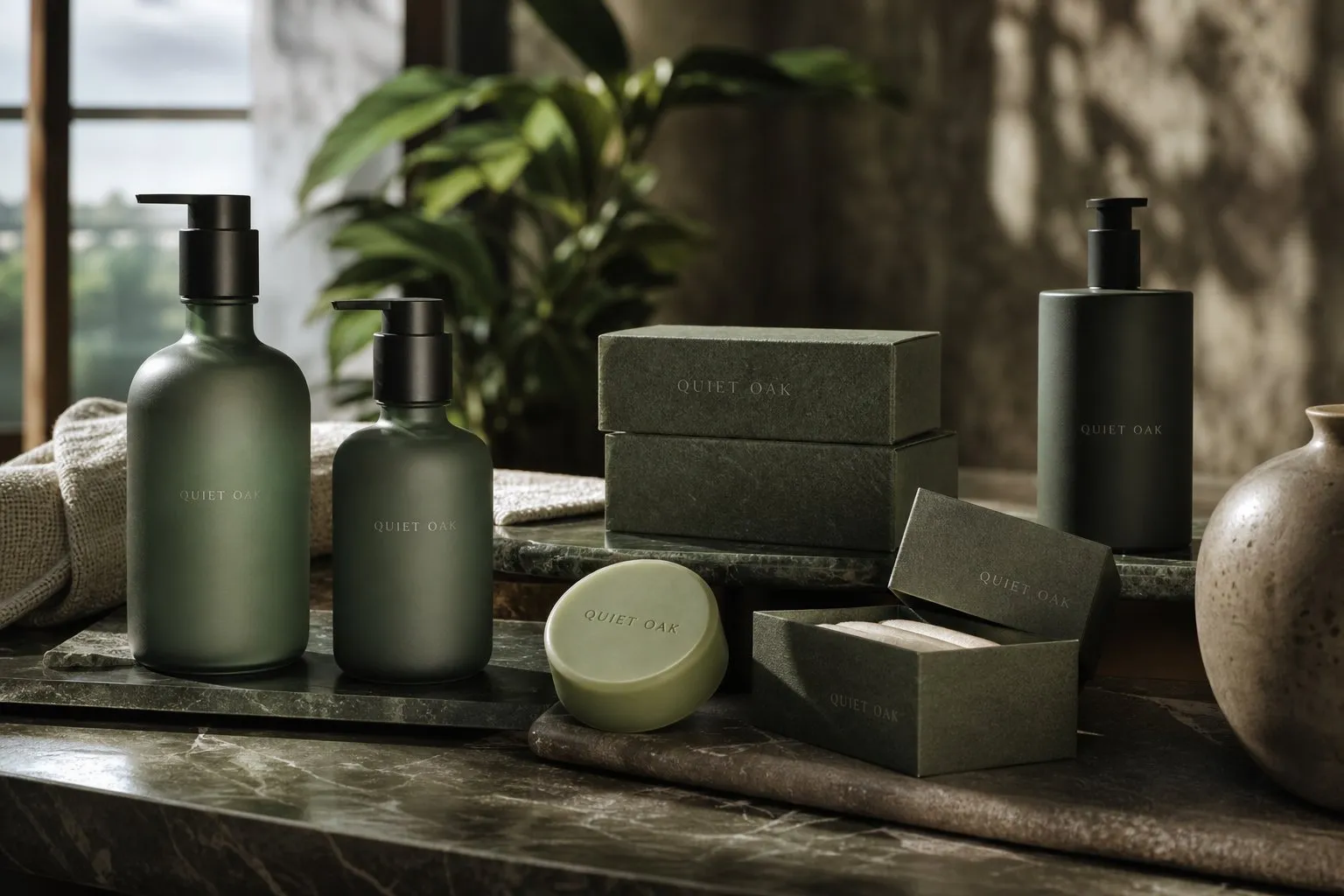
Sustainable hotel amenities reduce waste and environmental impact across four levers: packaging (paper instead of plastic), formula (responsibly sourced ingredients), format (refillable and solid instead of single-use), and certification (third-party proof, not marketing words). Get those right and you cut plastic without cutting the guest experience.
We’ve helped properties in 40 countries move to lower-waste programs since 2013, and the honest lesson is this: sustainability done well is invisible to the guest and obvious to your ESG report. This guide covers what actually moves the needle, what’s just greenwashing, and how to switch without disrupting your rooms.
Why sustainable amenities matter now
Three forces have turned this from “nice to have” into a procurement requirement:
- Guests expect it. Travelers increasingly notice single-use plastic, and many book through platforms that surface sustainability.
- ESG reporting needs evidence. Owners and brands need real, measurable reductions — not vague claims.
- Regulation is tightening. Several markets now restrict small single-use plastic toiletry bottles in hotels, and more are following. (More on that in our guide to single-use plastic bans.)
The good news: the changes that satisfy all three rarely hurt the guest experience, and some improve it.
What makes a hotel amenity “sustainable”?
It’s not one thing — it’s four levers you can pull independently. Pull more of them, lower your impact.
| Lever | Conventional | Sustainable swap |
|---|---|---|
| Packaging | Plastic bottles, sachets, boxes | Kraft / sugarcane paper, board, soy ink |
| Formula | Standard | sustainably sourced palm oil, responsible ingredients |
| Format | Single-use bottles | Refillable dispensers, bulk, solid bars |
| Certification | ”Eco-friendly” claim | GMPC + RSPO + FSC, verifiable |
A genuinely sustainable line pulls several of these at once. A bottle that’s “recyclable” but still single-use, with an unverified “natural” claim, is pulling none of them convincingly.
The biggest wins, in order
If you do nothing else, do these — ranked by impact per effort.
- Move to refillable bulk. Replacing small bottles with wall-mounted dispensers refilled from bulk is the single biggest plastic cut available. See the full comparison in refillable dispensers vs bottles.
- Switch packaging to paper. Kraft and sugarcane on board, printed with soy ink, replaces plastic boxes and sachets — and often looks more premium. Our paper vs plastic guide maps this in detail.
- Add solid bars. Solid shampoo and conditioner remove the bottle entirely — a visible ESG statement. See our guide to solid shampoo bars for hotels.
- Specify responsible formulas. Palm-based formulas on sustainably sourced oil lower the footprint of your bath care without changing performance.
Explore the full eco line, which is built around exactly these swaps.
Buying tip: Start where guests won’t notice — dispensers in public washrooms and back-of-house. It’s the biggest plastic cut with the lowest experience risk, so you build momentum (and a reportable number) before touching the in-room set.
Certifications that actually back a claim
This is where most “sustainable” amenities fall apart. A claim is only as good as the proof behind it. The certifications that mean something for hotel amenities:
- RSPO — Roundtable on Sustainable Palm Oil, for responsibly sourced palm-based formulas
- FSC — Forest Stewardship Council, for responsibly sourced paper packaging
- GMPC and GMPC — the manufacturing-quality standards underneath it all
We manufacture under all of these; you can see the documents on our certifications page, and our guide to RSPO, FSC and soy ink explains what each one actually proves. The rule for your own marketing: only claim what a certificate can prove. “Made with sustainably sourced palm oil and paper” is a fact a guest or an OTA filter can stand behind. “Eco-friendly” alone is not.
Does sustainable cost more?
Not the way people assume. The picture by lever:
- Refillable bulk costs more up front (hardware) but less over time — you buy liquid, not packaging.
- Paper packaging lands close to plastic, sometimes below once you factor in the premium look.
- Solid bars are competitive per guest and cut packaging entirely.
So it’s usually a higher up-front spend on dispensers traded for lower ongoing cost and a stronger ESG story — not a blanket “green premium.” When you compare quotes, ask for cost per guest over a year, not unit price. A cheap bottle binned daily can cost more annually than a refilled dispenser.
How to phase the switch (without disruption)
The most common mistake is ripping out the whole program at once, hitting a snag, and stalling. Don’t. Phase it:
- Phase 1 — invisible wins. Dispensers in back-of-house, public washrooms, gyms and pools. Biggest cut, no in-room change.
- Phase 2 — packaging. Move kits and boxes to kraft / sugarcane paper.
- Phase 3 — in-room formats. Introduce bars and, where it fits your tier, in-room dispensers or larger refillable formats.
Keep your existing formula and fragrance through every phase. A scent change is the one thing guests will notice, so never pair a sustainability switch with a formula switch.
Avoiding greenwashing
The fastest way to lose the trust you’re trying to build is to overclaim. The guardrails we give clients:
- Don’t claim what you can’t certify. If it’s not RSPO or FSC, don’t imply it is.
- Be specific. “We’ve moved to refillable dispensers and paper” beats “we love the planet.”
- Don’t hide the trade-offs. If only public areas are refillable so far, say so — guests respect honesty over spin.
Sustainable options by category
Every part of the guest set has a lower-waste version. Here’s where to look, category by category:
- Bath & body. Refillable bulk in dispensers, solid bars, sustainably sourced formulas, and recyclable or paper-based packaging for any remaining single-use items. See bath & body.
- Amenity kits. Swap plastic boxes and sachets for kraft and sugarcane paper on board. The biggest, easiest visual win — explore amenity kits and the eco line.
- Slippers. EVA and recycled-material slippers with paper bands instead of plastic wrap.
- Fragrance. Refillable reed diffusers topped up from bulk, rather than disposable units.
- Accessories. Paper-based wipes packaging, FSC notepads, and bags in recycled or paper materials. See accessories.
- Travel & vacation kits. Self-contained kits in paper packaging suit Airbnb and short-stay hosts who want a tidy, low-waste welcome kit.
The point: you don’t have to convert everything at once. Pick the categories with the most plastic and the least guest-experience risk first.
How to measure and report your impact
A sustainability program you can’t measure is a sustainability program you can’t report — and ESG reporting is half the reason to do this. Track a few simple numbers from the start:
- Single-use bottles removed per year (the headline figure for any bottle-to-dispenser switch)
- Share of the guest set that’s refillable or paper-based (an easy percentage to report and improve)
- Certifications in use (RSPO formulas, FSC packaging) with their coverage across your line
Buying tip: Capture your baseline before you switch — how many bottles and how much plastic you use today. Without a baseline you can’t show the reduction, and the reduction is the number your owners and guests actually care about.
These figures also keep you honest. They’re the difference between “we’ve removed an estimated 40,000 plastic bottles a year across our portfolio” and a vague “we care about sustainability” line that convinces no one.
What a switch looks like for a 200-room hotel
To make this concrete, here’s how we’d typically phase a mid-size property — adapt the shape to your own rooms:
- Phase 1 (now): Convert public washrooms, the gym, the pool and back-of-house to locking dispensers on bulk refills. Invisible to in-room guests, this is usually the single biggest plastic cut and gives you a number to report straight away.
- Phase 2: Move all amenity kits and boxes to kraft or sugarcane paper on board. The most visible “this hotel has changed” signal, and often a perceived-quality upgrade.
- Phase 3: Introduce solid bars and, in 3–4 star rooms, in-room dispensers. Keep branded bottles in suites where the in-room moment matters.
Throughout, the bulk and formulas stay in the property’s existing scent, so nothing about the switch reads as a downgrade to a guest. The result is a measurable plastic reduction, a stronger ESG report, and — done this way — no drop in guest satisfaction. The exact volumes, formats and pricing come back on a quote against the room count and tier.
Common myths that hold properties back
After years of these conversations, the same misconceptions stop hotels from switching. Here’s the reality on each.
- “Eco means lower quality.” Only if you let it. Keep your existing formula and fragrance and use considered packaging, and guests perceive the same or higher quality. The downgrade happens when properties cut formula quality at the same time as the packaging — so don’t.
- “Sustainable amenities are always more expensive.” Up front, dispensers cost more than bottles. Over time you usually save, because you buy bulk liquid instead of packaging every dose. Measured per guest per year, the eco route is often cheaper.
- “Recyclable plastic is good enough.” Recyclable isn’t the same as recycled, and most small hotel bottles aren’t recycled in practice. Reducing single-use plastic beats relying on a recycling stream that may not exist locally.
- “Guests don’t really care.” A growing share do, and booking platforms increasingly surface sustainability. Even where guests are neutral, your owners, brand standards and (increasingly) regulators care.
- “We have to switch everything at once.” The opposite is true. Phasing is cheaper, lower-risk and still delivers a reportable reduction from the first phase.
The thread through all five: sustainability done properly is a procurement and brand win, not a compromise. The properties that struggle are the ones that treat it as a box to tick rather than a program to plan.
Frequently asked questions
What are the most sustainable hotel amenities?
Refillable dispensers with bulk refills cut the most plastic, followed by paper-packaged kits, solid bars, and sustainably sourced formulas. The most sustainable program pulls several of these levers at once rather than relying on one.
Do sustainable amenities feel cheaper to guests?
Not if done well. Keep your existing formula and scent and use considered paper packaging, and guests often perceive higher quality. The downgrade only happens when properties cut formula quality at the same time.
What certifications prove an amenity is sustainable?
For hotel amenities, look for RSPO (sustainable palm oil) and FSC (responsible paper), backed by GMPC manufacturing. Ask for certificate numbers, not adjectives.
Where should we start?
Refillable dispensers in public washrooms and back-of-house — the biggest plastic cut with the lowest guest-experience risk. Then packaging, then in-room formats.
Is sustainable more expensive?
Up front, dispensers cost more than bottles; over time, you usually save because you buy liquid instead of packaging. Compare on cost per guest per year, not unit price.
Planning a lower-waste program? Request a quote with your room count, and we’ll map a phased switch — what to change first, the certifications behind it, and the pricing. New to building a full guest set? Start with our complete hotel amenities list.