guides
Solid Shampoo Bars for Hotels: A Practical Guide
UMYAN · Jun 12, 2026
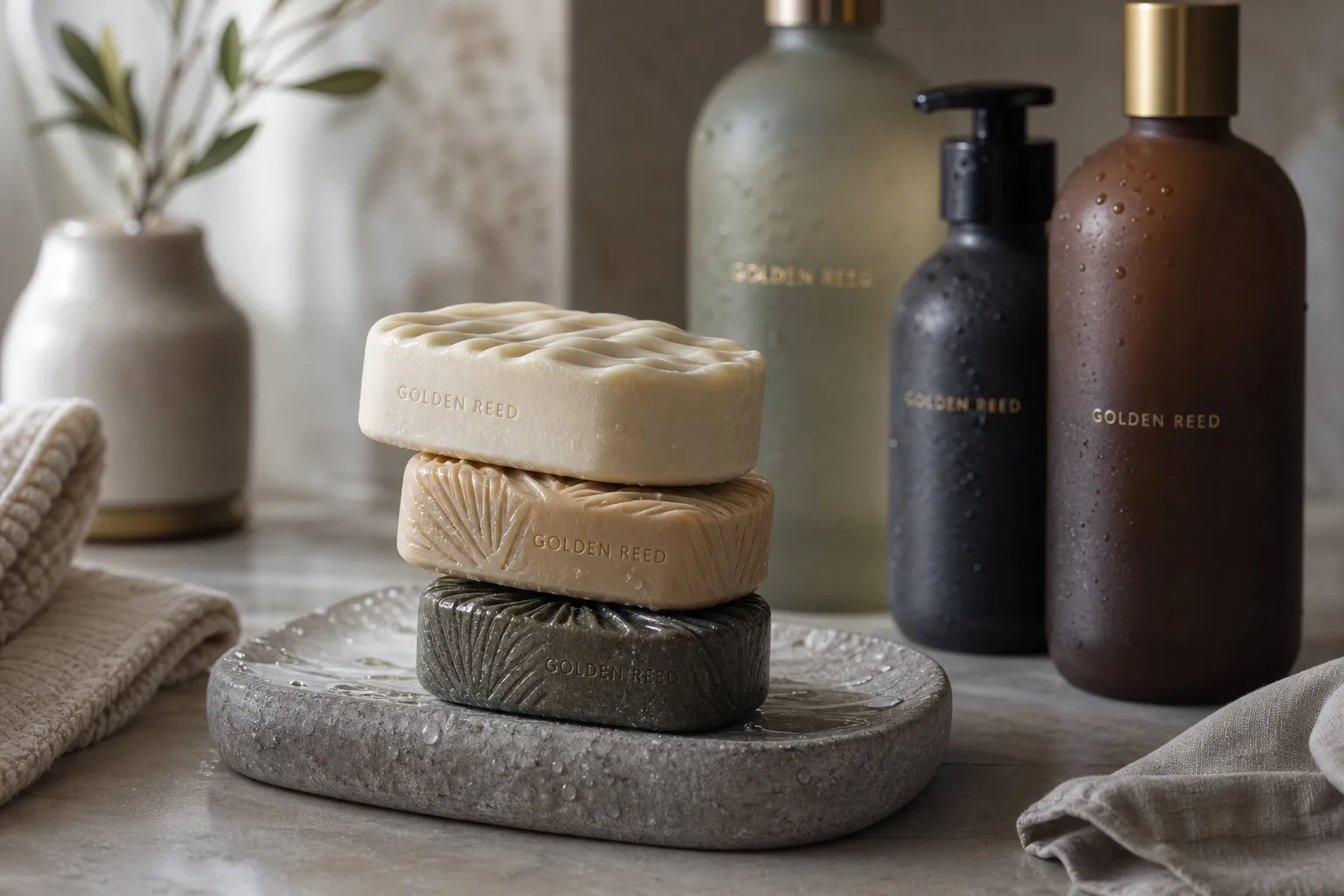
Solid shampoo and conditioner bars let a hotel remove the bottle entirely — no plastic, a smaller footprint, and a visible sustainability signal guests notice. They’re not right for every room, but for ESG-led and design-conscious properties they’re one of the clearest ways to show a commitment to cutting single-use plastic. Here’s where they work, where they don’t, and how to make them look premium rather than worthy.
We manufacture both liquid and solid formats, so this is a balanced view, not a sales pitch for bars. It’s part of our wider sustainable hotel amenities guide.
Why bars, and why now
A bar removes the single biggest sustainability problem with in-room toiletries: the small plastic bottle. One bar replaces multiple bottles, ships lighter, and leaves no plastic behind. For a property building an ESG story — or getting ahead of single-use plastic bans — that’s a strong, visible move.
There’s also a guest-perception shift. A well-made, well-branded bar reads as considered and premium, not cheap. Done right, it signals care, which is exactly the impression a sustainability program should create.
Where bars fit best
Bars aren’t a universal replacement — they shine in specific contexts:
- Eco-led and design-conscious properties whose guests expect and appreciate the statement.
- Boutique and lifestyle hotels, where a beautifully wrapped bar suits the brand.
- Resorts and wellness properties, alongside refillable dispensers, as part of a broader low-waste set.
- As a complement, not a total swap — many properties introduce bars in some rooms or tiers while keeping liquids elsewhere.
See how bars sit within the full eco line.
Where bars don’t fit (be honest)
A guide that only sells the upside isn’t useful. Bars have real trade-offs:
- Guest familiarity. Some guests still prefer a pump of liquid; a bar needs a clear, attractive presentation so it reads as intentional, not as a missing bottle.
- Drainage and dish. Bars need a small dish or holder so they don’t sit in water — factor that into the bathroom.
- Very high-turnover economy rooms may do better with a 2-in-1 liquid on pure cost.
The point: introduce bars where they make sense, not as a blanket mandate.
Branding a bar so it looks premium
This is where a bar succeeds or fails. A naked bar on a sink reads as cheap; a considered one reads as luxury. The levers:
- Emboss your logo directly into the bar — tactile and premium.
- Wrap in paper, kraft or printed, with soy ink, rather than plastic film.
- Present it well — a small paper box or a branded dish makes it feel like an amenity, not an afterthought.
Buying tip: Treat the bar’s packaging and presentation as seriously as a bottle’s label. The bar itself is sustainable; the presentation is what makes guests perceive it as premium rather than penny-pinching.
Bars and your cost
On cost, bars are competitive: you remove the bottle, the pump and the liquid’s water weight in shipping. Per guest they often land at or below a comparable liquid set, while cutting packaging entirely. As always, the real comparison is cost per guest over time, and the exact figure depends on your spec — so it’s best quoted to spec.
How to introduce bars without complaints
The difference between a bar program guests love and one they’re confused by is almost entirely presentation and signalling. A few simple moves remove the friction:
- Make it obvious it’s intentional. A small card or a clear setup tells the guest this is a deliberate, premium choice — not a missing bottle.
- Give it a home. A dedicated dish or holder keeps the bar dry and looking cared-for.
- Start in the right rooms. Introduce bars first where guests appreciate the statement — eco, boutique and wellness rooms — before rolling wider.
- Keep a familiar scent. If the bar carries the same fragrance as the rest of your line, it feels like part of the set, not a substitute.
Done this way, bars become a talking point in your favour rather than a question mark.
Bars as part of a wider low-waste set
Bars work best not as a lone gesture but as one element of a coherent program — refillable dispensers in public areas, paper-packaged kits, and bars in the rooms that suit them. Together they tell a consistent story and add up to a real, reportable plastic reduction. See how they fit in the full sustainable hotel amenities plan.
Frequently asked questions
Are solid shampoo bars good for hotels?
For ESG-led, boutique and wellness properties, yes — they remove plastic entirely and read as premium when well branded. They work best introduced where guests appreciate the statement, often alongside refillable dispensers, rather than as a blanket swap.
Do guests like shampoo bars?
Many do, especially eco-conscious travelers, provided the bar is well presented with a clear, attractive setup. A naked bar with no dish or branding reads as cheap; a wrapped, embossed bar with a holder reads as considered.
Are bars cheaper than bottles?
They’re competitive. You remove the bottle, pump and shipping water weight, so per guest they often match or beat a liquid set while cutting packaging. The exact comparison depends on your spec.
Can shampoo bars be branded?
Yes — emboss your logo into the bar and wrap it in printed paper with soy ink. Presentation is what makes a bar read as premium.
Thinking about introducing bars? Request a quote with your room count and tiers, and we’ll recommend where bars fit, how to present them, and the pricing — keeping your scent consistent with the rest of your line.