guides
Refillable Dispensers vs Bottles: Which Is Right for Your Hotel?
UMYAN · Jun 11, 2026
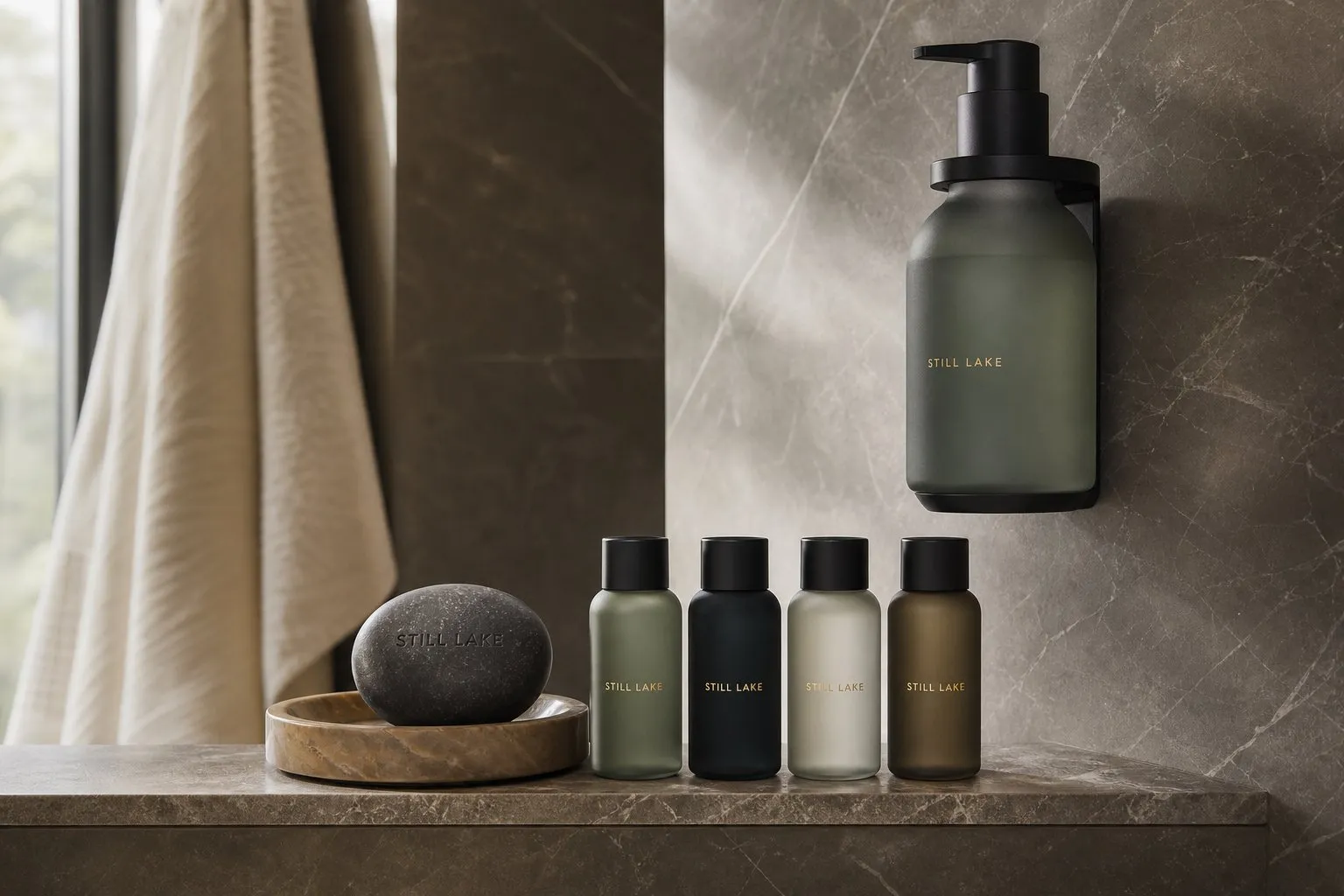
For hotels, refillable dispensers cut plastic and housekeeping time, while single-use bottles keep a premium in-room feel and a lower up-front cost. Most properties don’t choose one — they run dispensers in public areas and bottles in the rooms. The right mix depends on your tier, your sustainability goals and your washroom layout.
This is one of the most common questions we get, so here’s the honest comparison from someone who manufactures both. If you’re building a wider low-waste program, this fits inside our sustainable hotel amenities guide.
The comparison at a glance
| Refillable dispensers | Single-use bottles | |
|---|---|---|
| Plastic & waste | Much lower | High |
| Up-front cost | Higher (hardware) | Lower |
| Ongoing cost | Lower (buy liquid, not packaging) | Higher per use |
| Housekeeping | Refill less often | Restock every room |
| Guest feel | Modern, expected by ESG brands | Traditional, “yours to take” |
| Best location | Public washrooms, showers, gyms | In-room, premium tiers |
| Security | Lockable models prevent tampering | N/A |
The plastic-bottle bans driving the switch
For a growing number of properties this isn’t optional. California’s AB 1162 prohibits lodging from providing personal-care products in small plastic bottles — since January 2023 for hotels with 50 or more rooms, and since January 2024 for all lodging establishments. Other US states and the European Union are tightening rules on single-use plastics in hospitality too. If you operate or supply in these markets, refillable dispensers (or plastic-free amenities) are the compliant path, not just the sustainable one.
When dispensers win
Dispensers are the bigger plastic and cost cut, and they shine in high-traffic, shared spaces:
- Public washrooms, gyms and pools churn through small bottles constantly — a wall-mounted unit ends that.
- Showers in 3–4 star rooms, where a refillable system reads as modern, not cheap.
- Whole-property ESG goals, where you need a measurable, reportable plastic reduction.
For example, a 200-room property moving its public washrooms and showers to dispensers removes hundreds of small bottles per room every year — and because the bulk carries your existing scent, guests rarely notice a change. See dispensers, the triple-wall dispenser and the stainless anti-theft dispenser.
When bottles still make sense
Bottles aren’t obsolete. They still win where the in-room moment matters most:
- 5-star and suite rooms, where a beautifully branded 40ml bottle is part of the luxury experience.
- Properties that want guests to take the product home as a branded touchpoint.
- Heritage or boutique brands whose identity is tied to a signature bottle.
A premium 30–40ml bottle is one of the most-handled branding surfaces in the room, and a dispenser can’t replicate that.
Types of dispenser to know
Not all dispensers are equal. The main choices:
- Single, double or triple heads — match the number of products (shampoo, conditioner, shower gel) to the location.
- Locking / anti-theft stainless — essential for public areas, where open-top units get tampered with or topped up with the wrong liquid.
- Refill source — bulk in 1L / 3.78L / 5L in your matched formula and fragrance.
Buying tip: In any public or shared space, always specify a locking dispenser. The cost difference is small, and an open-top unit that gets refilled with the wrong liquid becomes a guest complaint and a housekeeping headache.
What about cost over time?
The sticker price comparison — a cheap bottle vs an expensive dispenser — is misleading. The real comparison is cost per guest over a year:
- Bottles repeat their full cost every single use, packaging included.
- Dispensers cost more once (hardware), then you only pay for bulk liquid.
For a high-occupancy property, the dispenser usually wins on total cost within a reasonable period, on top of the waste reduction. Ask any supplier to quote you on annual cost per room, not unit price.
Where to place dispensers in your property
A dispenser program works best when you match the format to the space rather than installing the same unit everywhere:
- In-room shower: a double or triple head (shampoo, conditioner, shower gel) fixed to the wall, refilled by housekeeping.
- In-room vanity: a refillable foaming hand wash or a pump bottle, depending on tier.
- Public washrooms: locking stainless units only — this is the highest-tampering area.
- Gyms and pools: high-traffic, high-churn spaces where dispensers save the most bottles and labour.
- Suites and luxury rooms: often the one place to keep branded bottles, for the premium in-room moment.
Mapping it space by space also tells you how much bulk you’ll need and where back-of-house storage has to be — both worth knowing before you order.
Mistakes to avoid
- Going all-dispenser overnight. Start with public areas, keep bottles in premium rooms, and switch in phases.
- Skipping the lock. Open-top dispensers in public areas invite tampering. Always lock shared-space units.
- Changing the scent at the same time. Keep your existing formula in the bulk so guests notice less waste, not a different smell.
- Ignoring refill logistics. Bulk needs back-of-house storage and a refill routine — plan it before you install.
Frequently asked questions
Are refillable dispensers cheaper than bottles?
Over time, usually yes. You pay more up front for the hardware, then buy bulk liquid instead of individually packaged bottles. For high-occupancy properties the total cost per guest typically drops, on top of the waste savings.
Do guests dislike dispensers?
Most guests don’t mind — especially when the dispenser carries your existing scent and looks clean and modern. The exception is luxury rooms, where a branded bottle is part of the experience, so many properties keep bottles there and use dispensers in public areas.
How do you stop dispensers being tampered with?
Use locking / anti-theft stainless models in any public or shared space. They prevent guests topping up the wrong liquid or removing product, which is the main operational risk with open-top units.
Can we keep our fragrance if we switch to dispensers?
Yes. The bulk refill can be made in your existing formula and fragrance, so a format change doesn’t mean a scent change.
Are refillable dispensers hygienic?
Yes, when you use sealed-pump units refilled from closed bulk and clean them on a normal housekeeping schedule. The liquid isn’t exposed to air or to guests between refills — the common hygiene objection is a solved design problem.
Are hotels required to stop using plastic bottles?
In some markets, yes. California prohibits small plastic amenity bottles in lodging (50+ rooms since 2023, all lodging since 2024), and other regions are moving the same way. Refillable dispensers and plastic-free amenities are how properties comply.
Bar soap or a dispenser — which do hotels prefer?
Many hotels run both: a pleated or stamped bar at the vanity for a premium tactile moment, and wall dispensers in the shower for shampoo, conditioner and shower gel. Bars cut plastic versus bottled body wash, while dispensers handle the high-volume shower products — it isn’t strictly either/or.
Weighing up a switch? Request a quote with your room count and washroom layout, and we’ll recommend a bottle-and-dispenser mix, the right dispenser types, and pricing.