guides
Paper vs Plastic: Building a Low-Waste Hotel Amenity Program
UMYAN · Jun 6, 2026
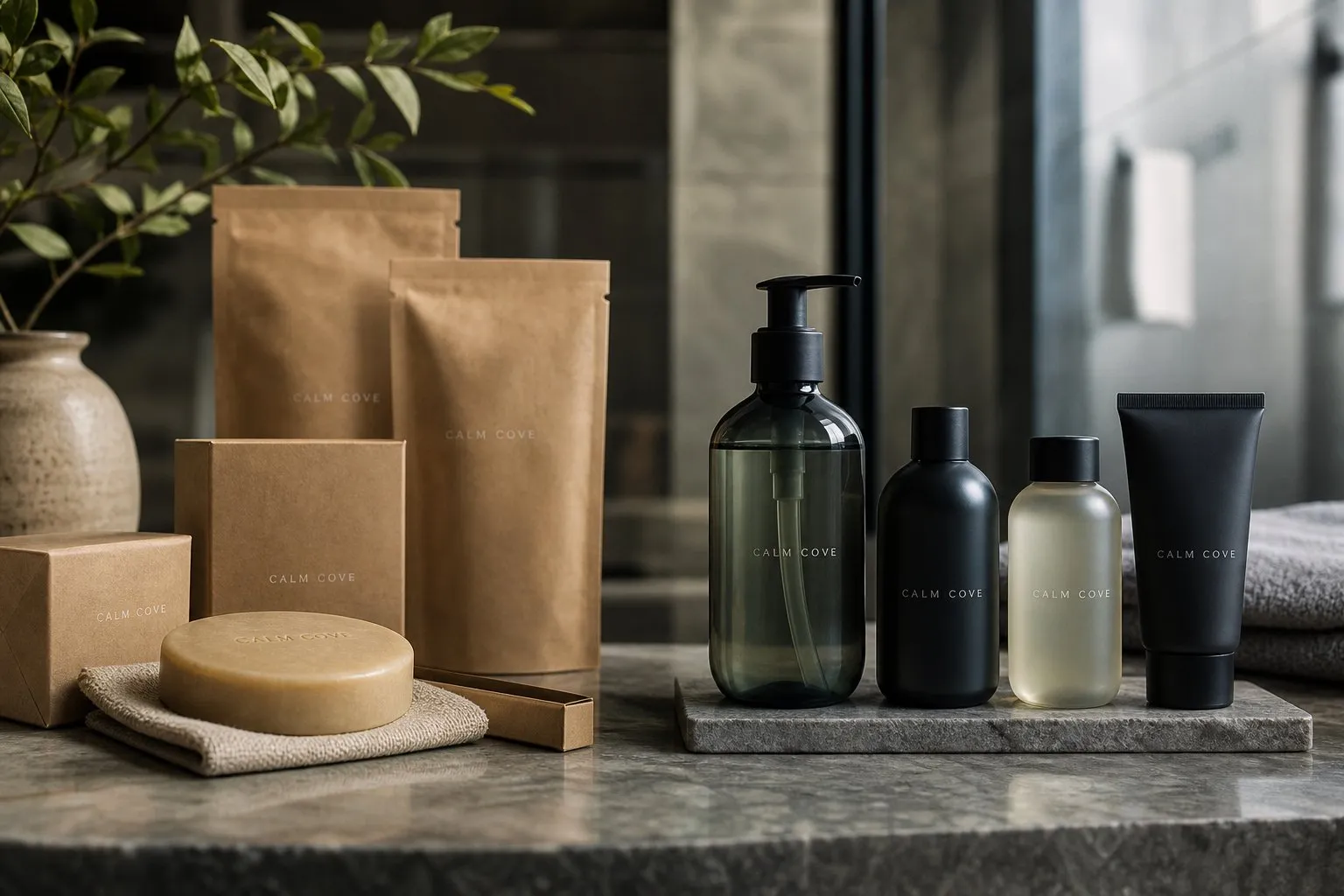
Cutting single-use plastic from guest amenities is now a procurement and ESG requirement, not a nice-to-have. The good news, and we say this from having switched programs for hotels in 40 countries: you can remove most of the plastic without guests perceiving any drop in quality. The trick is knowing where the big wins are, and switching in the right order.
This guide is one piece of a wider sustainable hotel amenities program; if you’re still mapping out your full guest set, start with our complete hotel amenities list.
Where’s the plastic actually coming from?
Before you switch anything, know where your waste is. In a typical room it’s three sources: small bath bottles, sachets and plastic kit boxes. Those three are where you’ll win or lose, so that’s where we focus. Tackle them in impact order.
1. Move to refillable bulk (biggest single win)
This is the largest cut you can make. Replacing small in-room or washroom bottles with wall-mounted dispensers refilled from 1L–5L bulk removes hundreds of bottles per room every year.
For example, a 200-room property switching its public washrooms and showers to dispensers eliminates thousands of small bottles annually — and because the bulk carries your existing formula and scent, guests don’t notice a downgrade. They usually don’t notice at all, which is the goal.
Buying tip: Use a locking dispenser in public areas. Open-top units get tampered with or refilled with the wrong liquid, and then it’s your housekeeping team explaining a complaint. See the stainless anti-theft dispenser.
2. Swap packaging to paper
For everything that stays single-use, switch the packaging from plastic to paper. Sugarcane and kraft boxes and sleeves, printed with soy ink on responsibly sourced board, replace plastic boxes and sachets across your kits.
Here’s the part buyers underestimate: paper packaging often reads as more premium, not less. A matte kraft dental kit with a foil logo feels considered; a clear plastic sleeve feels disposable. Same contents, better impression, less plastic. Explore the eco line.
3. Choose responsible formulas
The liquid matters as much as the package. Palm-based formulas on sustainably sourced sustainable oil reduce the footprint of your bath care without changing how it performs. If a supplier claims “sustainable” formulas, ask which certification backs it — see what we hold on our certifications page.
4. Add solid bars
Solid shampoo and conditioner bars remove the bottle entirely. They’re a strong, visible ESG statement for properties that want guests to see the commitment, and they take branding beautifully — embossed or wrapped. A good option to introduce alongside dispensers.
Paper vs plastic, at a glance
| Element | Plastic default | Lower-waste swap |
|---|---|---|
| In-room / washroom liquids | Small single-use bottles | Refillable dispensers + bulk |
| Kit packaging | Plastic box / sachet | Kraft or sugarcane paper, soy ink |
| Soap | Plastic-wrapped | Solid bar, embossed or paper-wrapped |
| Formula | Standard | sustainably sourced |
| Board source | Mixed | responsibly sourced |
The mistake to avoid: switching everything at once
The most common error we see is a property ripping out its entire program in one go, hitting a supply or guest-feedback snag, and stalling the whole initiative.
Don’t. Phase it. Start with dispensers in back-of-house and public washrooms (invisible to guests, biggest waste cut), then move kit packaging to paper, then introduce bars. Each phase is low-risk and shows measurable plastic reduction you can report.
Buying tip: Keep your existing formula and fragrance through every phase. The whole point is that guests notice less waste, not less quality. A scent change is the one thing they will notice — so don’t pair a sustainability switch with a formula switch.
Does a low-waste program cost more?
This is the first question every procurement manager asks, and the honest answer is: it depends on where you look.
- Refillable dispensers cost more up front — you’re buying hardware — but less over time, because you pay for liquid in bulk instead of paying to package every 30ml. For a property that keeps amenities for years, the running cost usually drops.
- Paper packaging lands close to plastic on price, and sometimes below it once you account for how premium it looks. You’re rarely paying a “green premium” here.
- Solid bars are competitive per guest and remove packaging cost entirely.
So the real picture isn’t “eco equals expensive.” It’s a higher up-front spend on dispensers, traded for lower ongoing cost and a stronger ESG story. The properties that get burned are the ones that compare the sticker price of a bottle to a dispenser and stop there.
Buying tip: When you compare quotes, ask for the cost per guest over a year, not the unit price. A cheap bottle used and binned daily can cost more annually than a dispenser refilled from bulk.
Make the switch visible — without greenwashing
If you’re investing in a lower-waste program, let guests know — but back every claim with something real. A vague “we care about the planet” card does nothing. A short line that says you’ve moved to refillable dispensers and paper, with the certifications behind it, actually builds trust.
The rule we give clients: only claim what you can prove. If your formula is on sustainably sourced oil and your packaging is board with soy ink, say exactly that — those are verifiable facts a guest, or an OTA’s sustainability filter, can stand behind. Anything fuzzier reads as greenwashing and does more harm than good. See the standards we hold on our certifications page.
Frequently asked questions
Will guests think eco amenities are lower quality?
Not if you keep your formula and scent and use considered paper packaging. In practice, paper kits and refillable dispensers often raise perceived quality, not lower it.
What certifications should low-waste amenities have?
Look for RSPO (sustainable palm oil) on formulas and FSC on paper packaging, backed by GMPC and GMPC manufacturing. Ask for certificate numbers, not adjectives.
Where should we start?
Refillable dispensers in public washrooms — biggest plastic cut, lowest guest-experience risk. Then paper packaging, then bars.
Planning a lower-waste program? Request a quote with your room count, and we’ll map a phased switch — what to change first, the certifications behind it, and the pricing.