guides
Private Label Hotel Amenities: The Complete Guide
UMYAN · Jun 11, 2026
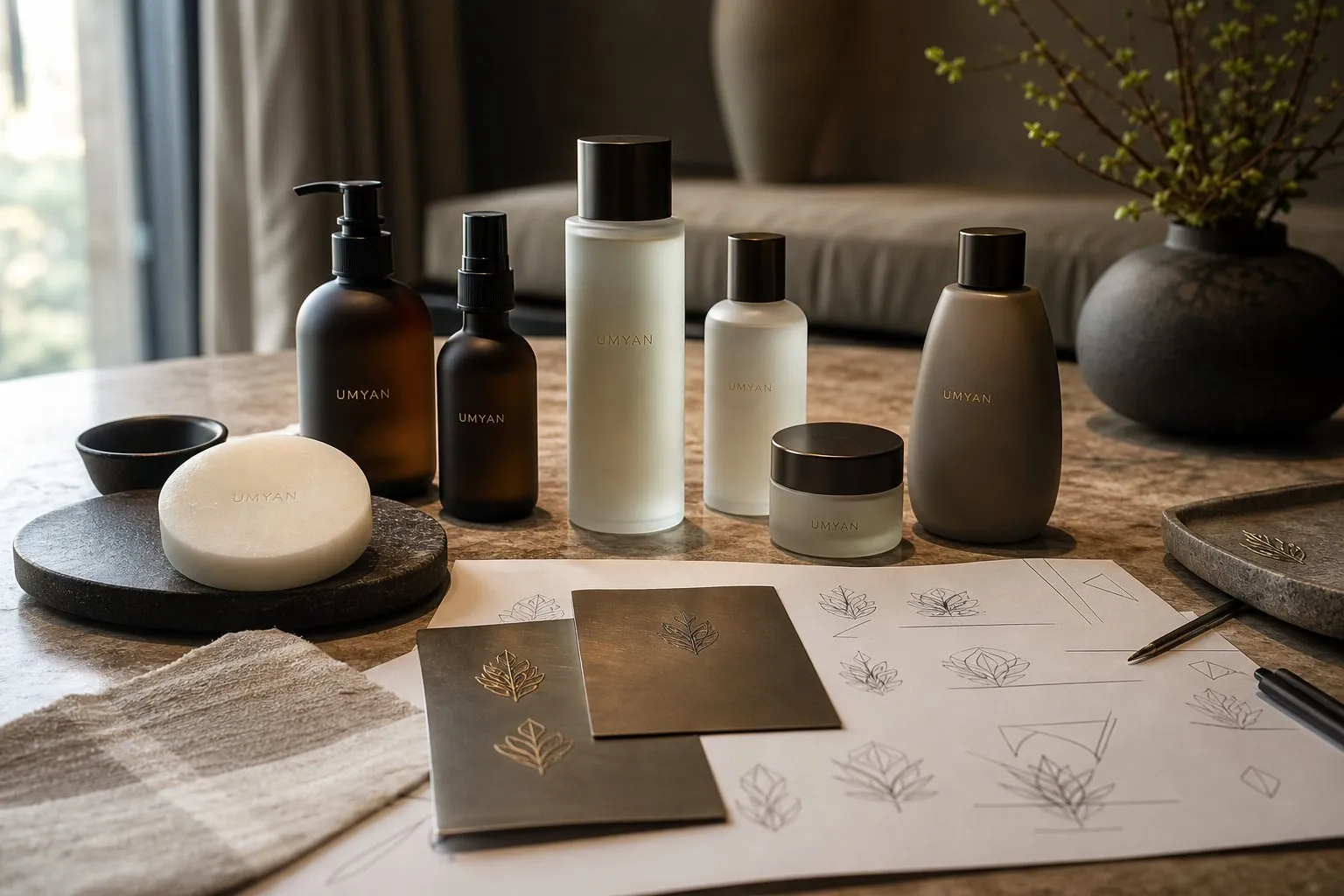
Private label hotel amenities are guest toiletries and kits manufactured for you to sell or place under your own brand — your logo, and often your own formula, fragrance and packaging. Instead of buying a generic set, you get amenities that look and feel like an extension of your property.
If you’ve ever picked up a beautifully branded bottle in a hotel room and wondered how a property gets its own line made, this is it. We’ve built private label programs for hotels in 40 countries since 2013, so this guide walks through what’s actually involved — what you can customize, how the process works, and how to pick a partner who won’t let you down.
What does “private label” actually mean?
The terms get used loosely, and suppliers don’t always mean the same thing. Here’s the plain-English version:
| Term | What it means in practice |
|---|---|
| Private label | Existing, proven products made under your brand — your logo on labels, boxes and kits. Fastest route to a branded line. |
| White label | Similar idea; a generic product rebranded for you. Often used interchangeably with private label. |
| OEM | The factory makes a product to your specification (your formula, your design). More control, more setup. |
| ODM | The factory designs and makes, you brand it. You lean on the manufacturer’s R&D. |
For most hotels, “private label” in everyday use means: take a high-quality base line and make it yours. How far you take the customization — just the label, or all the way to a bespoke formula — is up to you. See your options on our customization page.
What can you actually customize?
This is where a real manufacturer separates from a reseller. The levels, from quickest to most bespoke:
- Label & print — your logo, colors and copy on labels or silk-screened directly onto bottles. The fastest, most affordable level.
- Packaging & design — your own box, sleeve or pouch design for kits, in card, kraft or sugarcane, printed with soy ink.
- Custom formula & fragrance — a shampoo, gel or lotion developed to your spec, carrying a scent built for your brand. This needs a lab and chemists, not just a printer.
- Format & size — choose bottle, tube, pump, bulk or bar, in the sizes that fit your room tiers.
- Slippers & soap detailing — embroidery on slippers, embossing on soap.
Because we run 1,000+ in-house formulas and develop fragrance with Givaudan, we can take you all the way to a signature scent — the thing guests can’t name but remember. A reseller can only restick a label. (See our deep-dives on custom hotel soap & toiletries and signature scent programs.)
Buying tip: Decide your customization level before you ask for quotes. “Just our logo on your best bath line” and “a bespoke formula and scent across six products” are very different projects on cost and timeline. Knowing which one you want makes every quote comparable.
How does the private label process work?
A typical program runs in six steps. Knowing them helps you plan, especially around a new opening.
- Brief. You share your brand, room tiers, target feel, sustainability goals and rough volumes.
- Product selection. You pick the base line — categories, formats, sizes. Start from our complete hotel amenities list if you’re not sure what a full set needs.
- Customization & samples. Labels, packaging and (if chosen) formula/fragrance are developed. You approve physical samples — never sign off on a screen alone.
- Compliance check. Formulas and packaging are confirmed against the certifications relevant to your markets (see below).
- Production. The approved line is manufactured. Capacity matters here for multi-property rollouts — ours is 150,000 sets a day.
- Delivery. The finished, branded amenities ship to your properties or distribution point.
Buying tip: Start this process months before a launch, not weeks. The custom formula and sampling steps take real time, and rushing them is how properties end up with a generic stopgap set on opening day.
What about cost and minimum order quantity?
Two honest points, because this is where buyers most want a straight answer:
- Cost scales with customization level. Label-only is the most affordable; a bespoke formula across many products costs more but gives you something no competitor can copy.
- MOQ and lead time depend on the products and how custom you go. There’s no single number that’s true for every line — our guide to hotel amenities MOQ explains what drives it and how to keep yours low — which is exactly why a real partner gives you a quote against your spec rather than a vague figure.
So the practical step is a spec list, not a guess. Send your room count, tiers and customization level and you’ll get real MOQs, lead times and pricing. We never quote a price online — every program is quoted to spec.
Building a signature scent
If there’s one upgrade that punches above its cost, it’s a signature fragrance. One scent carried across your bath line, hand wash and lobby diffusers makes a property feel designed rather than assembled — and it’s unmistakably yours.
This is only possible with a manufacturer that has real fragrance development. Ours is built with Givaudan, and we can match a scent across bath & body and room fragrance so the whole property smells consistent.
Can private label be sustainable?
Yes — and increasingly it has to be. A branded line can be just as low-waste as a generic one:
- Paper packaging — kraft and sugarcane on board, soy ink
- sustainably sourced formulas
- Refillable bulk and solid bars to cut single-use plastic
Your brand on a considered, paper-based kit often reads as more premium than a glossy plastic one. Explore the eco line, and if sustainability is the driver, our paper vs plastic guide maps the switch.
Compliance: what your branded line must carry
When your name is on the bottle, the compliance is your reputation. A serious private label partner manufactures under, and can evidence:
- ISO 9001 (quality management) and GMPC (cosmetics GMP)
- GMPC in a class-100,000 cleanroom
- FDA registration for relevant formulas
- RSPO and FSC for sustainable formulas and paper
We hold all six. See the documents on our certifications page, and see how it’s made on our factory page. Sourcing from overseas? Our guide to choosing a hotel amenities manufacturer in China covers how to buy direct with confidence.
Label, silk-screen or emboss: choosing your branding finish
The way your logo lands on the product changes how the whole line reads. It’s a small decision that buyers often leave to the supplier — and shouldn’t. Here’s how the three main finishes compare.
| Finish | How it looks | Best for | Notes |
|---|---|---|---|
| Label | Full color, sharp detail | Detailed logos, ingredient text, economy to mid tier | Most flexible and affordable; watch for peeling edges over time |
| Silk-screen | Printed onto the bottle, no label edge | Clean, premium in-room bottles, 4–5 star | Fewer colors than a label, but a more “designed” result |
| Emboss / deboss | Tactile, raised or pressed mark | Soap, tubes, luxury detailing | Subtle and tactile; reads as high-end even without color |
A common, strong setup is silk-screen on the in-room bottles (the surface guests handle daily) and emboss on the soap, with full-color labels reserved for kits and back-of-house. The point is to choose deliberately rather than default to a sticker on everything. We can apply all three across the bath & body range and detail soap and slippers to match.
Buying tip: Ask to see the same logo executed as a label, a silk-screen and an emboss on real samples before you decide. The “right” finish is obvious the moment you hold all three; it’s almost impossible to judge from a quote sheet.
For a method-by-method breakdown of every finish, see our hotel amenities branding guide.
Private label by property type
How far you push customization depends on what kind of property you run. A 500-room chain and a 12-room boutique should approach a branded line differently:
- Hotel groups & chains. Consistency and supply reliability win. Lock one private-label system — one formula, one scent, one packaging family — and roll it out across every property. Production capacity matters here; ours is 150,000 sets a day for exactly this kind of multi-site rollout.
- Boutique & lifestyle hotels. This is where a full custom formula and signature scent earn their keep. Your amenities are part of the brand story, so this is the place to go all the way — bespoke fragrance, distinctive packaging, considered finishes.
- Resorts & spas. Larger sizes, more body care, and a scent that matches the spa experience. Guests stay longer and use more, so a refillable or larger-format private-label line often makes sense.
- Serviced apartments & short-stay. A self-contained, branded welcome or travel kit that restocks easily and survives guest handling beats loose branded items here.
If you’re not sure which level fits, start label-only on a proven base line and add custom formula later. You get a branded presence quickly, then deepen it once you’ve seen it in the rooms.
Mistakes to avoid with private label
After years of these programs, the same few errors recur:
- Signing off on a screen, not a sample. Colors and finishes look different in your hand. Always approve a physical sample.
- Branding only the label and stopping. A logo on a generic clear bottle still reads generic. The packaging finish matters as much as the logo.
- Customizing without a scent strategy. Different fragrances across products undo the “designed” feel. Match the scent across the line.
- Choosing a reseller for a formula job. Only a manufacturer with R&D can develop a real custom formula. A middleman will quietly outsource it, adding cost and delay.
- Leaving it too late. Custom work needs lead time. Treat amenities as an early decision, not a last-minute line item.
For the full vetting checklist, read how to choose a hotel amenities supplier.
Frequently asked questions
What’s the difference between private label and OEM hotel amenities?
Private label usually means putting your brand on a proven base line (logo, packaging, sometimes formula). OEM means the factory manufactures to your full specification, including a custom formula. Private label is faster; OEM gives more control. We do both.
Can we develop our own custom fragrance?
Yes. With 1,000+ in-house formulas and a Givaudan fragrance partnership, we develop bespoke scents and match them across your bath line and room fragrance for one signature smell.
What is the minimum order for private label amenities?
It depends on the products and customization level, so we quote it against your spec rather than publish a single figure. Send your room count and the line you want and we’ll come back with MOQs and pricing.
How long does a private label program take?
Label-only programs are quicker; custom formula and packaging take longer because of development and sampling. Start months ahead of a launch and build in time to approve physical samples.
Do private label amenities meet international compliance standards?
They should. Ours are manufactured under ISO 9001, GMPC, FDA, GRS, ISO 14001 and ISO 45001. Always ask a potential partner for certificate numbers, not just logos.
How big is the hotel amenities market?
Industry analysts value the global hotel amenities market at roughly US$24 billion, projected to reach around US$45 billion by the early 2030s (about 11% CAGR) — driven by travel recovery, premiumisation and the shift to sustainable, refillable formats. It’s a growing category, which is why more properties are moving to a distinctive private-label line rather than generic stock.
Ready to build a line that’s unmistakably yours? Request a quote with your brand, room count and customization level, and you’ll deal directly with the manufacturer — samples, certifications, realistic lead times and pricing, all in one place.