guides
Signature Scent Programs for Hotels: A Practical Guide
UMYAN · Jun 12, 2026
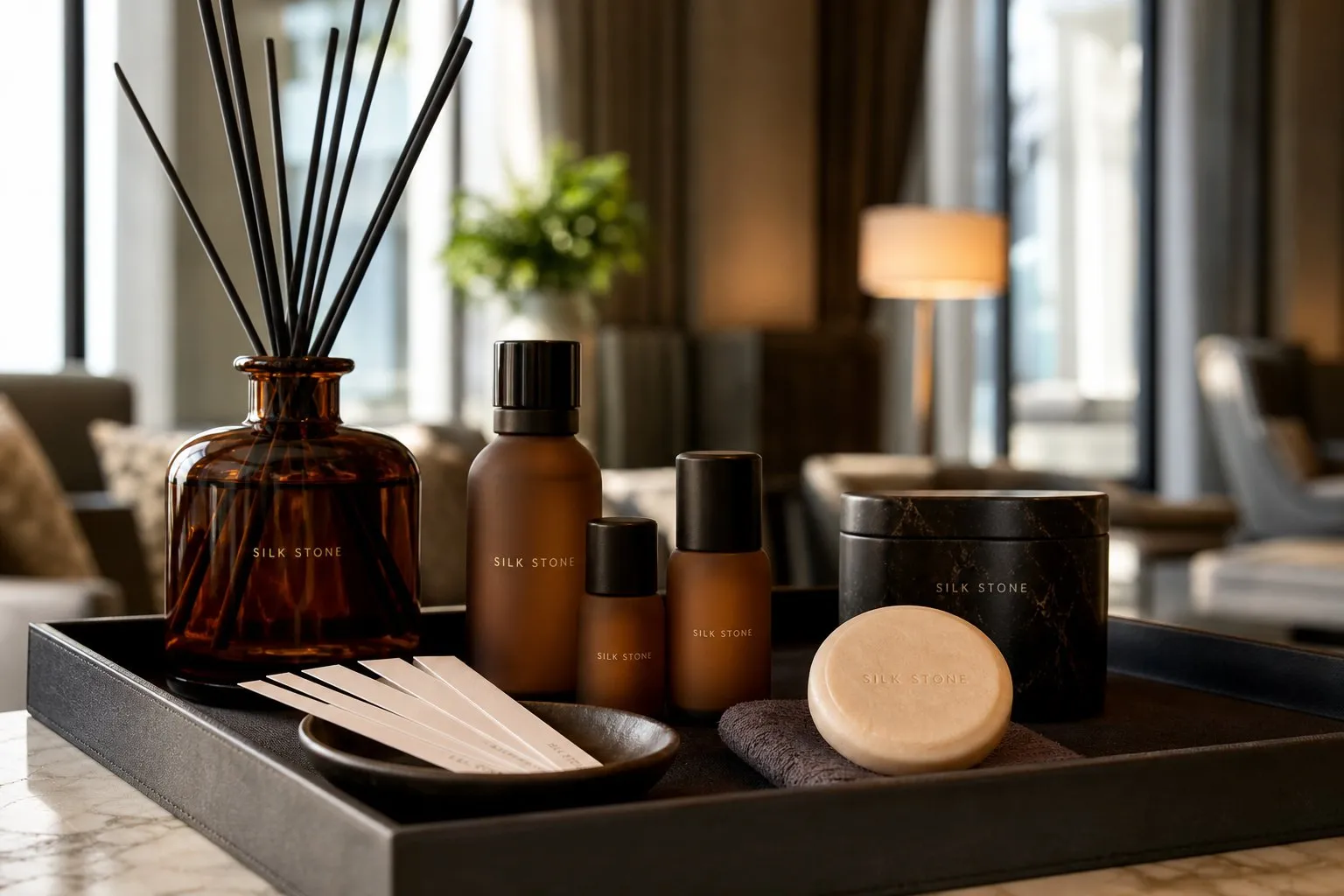
A hotel signature scent is one fragrance carried consistently across the lobby, rooms and amenities so the property has a smell guests recognize and remember. It’s one of the most powerful, and most underused, branding tools in hospitality — scent is tied directly to memory, so a well-chosen signature fragrance makes a stay linger long after checkout. Here’s how a scent program works and how to build one.
We develop signature scents for hotels with our fragrance partner Givaudan, so this is the practical view. It’s part of our private label hotel amenities guide.
Why scent is worth the investment
Of all the senses, smell is the most strongly linked to memory and emotion. A guest may forget the exact shade of the lobby, but they’ll remember how the place felt — and scent is a huge part of that feeling. A signature fragrance does three things:
- Makes the property memorable — guests associate the scent with your brand.
- Creates consistency — every space and product feels part of one designed experience.
- Signals quality cheaply — a considered scent reads as luxury without a major cost.
It’s the rare upgrade that punches well above its price.
Where the scent shows up
A true signature scent program runs across multiple touchpoints, not just one:
- Lobby and public areas — diffused into the air, the first impression
- Guest rooms — a reed diffuser and the bath amenities
- Bath line — shampoo, gel, soap and lotion in the same scent — see bath & body
- Hand wash — at every vanity
The magic is in the consistency: a guest who loves the lobby scent finds it again in the shower. That coherence is what separates a designed property from an assembled one.
How a scent program is developed
Building a signature scent is real fragrance work, which is why it needs a manufacturer with fragrance development (ours is with Givaudan). The typical process:
- Brief — your brand personality, the feeling you want (fresh, warm, woody, clean), and any references.
- Development — fragrance options are created and refined to a direction.
- Matching across formats — the chosen scent is built into bath formulas, diffusers and hand wash so it’s consistent everywhere.
- Sampling — you experience the scent in each format before sign-off.
- Rollout — produced and delivered across your properties.
Buying tip: Test the scent in every format, not just on a blotter. A fragrance can smell perfect on a test strip but behave differently in a shampoo, a diffuser and a bar of soap. Approve it in the actual products before you commit.
Rolling it out across a portfolio
For a group, a signature scent is also a consistency tool. Develop it once, then carry it across every property so a guest gets the same recognizable experience whether they’re in your city hotel or your resort. Because we keep one formula and scent and vary only size and format, a portfolio rollout stays consistent and cost-effective.
Does it work for smaller properties?
Yes — a signature scent is one of the highest-impact moves a boutique can make, and you don’t need a chain’s volume to develop one. See boutique hotel amenities for how independents use scent as a core brand asset.
How to choose a scent direction
The hardest part for most properties isn’t the process — it’s deciding what the scent should be. A useful way in is to start from the brand, not from a list of fragrances:
- What feeling should a guest have on arrival? Calm, energized, pampered, at home?
- What’s the setting? A coastal resort, a city business hotel and a heritage property suggest very different scent families (fresh and clean vs. crisp and neutral vs. warm and woody).
- Who’s the guest? A wellness spa and a design-led boutique attract different sensibilities.
From there, a fragrance team translates the brief into options. You don’t need to know perfumery — you need to know your brand, and let the development do the rest.
Buying tip: Pick a scent that works subtly at low intensity. A signature fragrance should be noticed, not overwhelming — guests spend hours in the space, and a scent that’s lovely for a minute can become tiring over a night. Test it at the intensity guests will actually live with.
One scent, many formats
The technical work behind a signature program is matching one fragrance across very different products — a diffuser, a shampoo, a bar of soap and a hand wash all carry scent differently. Getting them to read as the same smell is exactly the kind of formulation a manufacturer with in-house fragrance development handles. It’s why a signature program needs a real manufacturer, not a reseller.
Frequently asked questions
What is a hotel signature scent?
It’s a single fragrance carried consistently across a hotel’s lobby, rooms and amenities, so the property has a recognizable smell guests associate with the brand. Scent is strongly tied to memory, which makes it a powerful branding tool.
How is a hotel signature scent created?
A fragrance is developed to match your brand personality, then built into your bath formulas, diffusers and hand wash so it’s consistent across every touchpoint. This requires a manufacturer with fragrance development — ours is with Givaudan.
Can a small hotel have a signature scent?
Yes. A signature scent is one of the most impactful and affordable branding moves for a boutique, and you don’t need a chain’s volume to develop one.
Where should a signature scent be used?
Across the lobby and public areas, guest rooms (diffuser and amenities), the bath line and hand wash — the consistency across all of them is what makes it work.
Want a scent that becomes part of your brand? Request a quote with your property and brand direction, and we’ll develop a signature fragrance and match it across your amenities and diffusers.