guides
Hotel Amenities Manufacturer in China: A Buyer's Guide
UMYAN · Jun 12, 2026
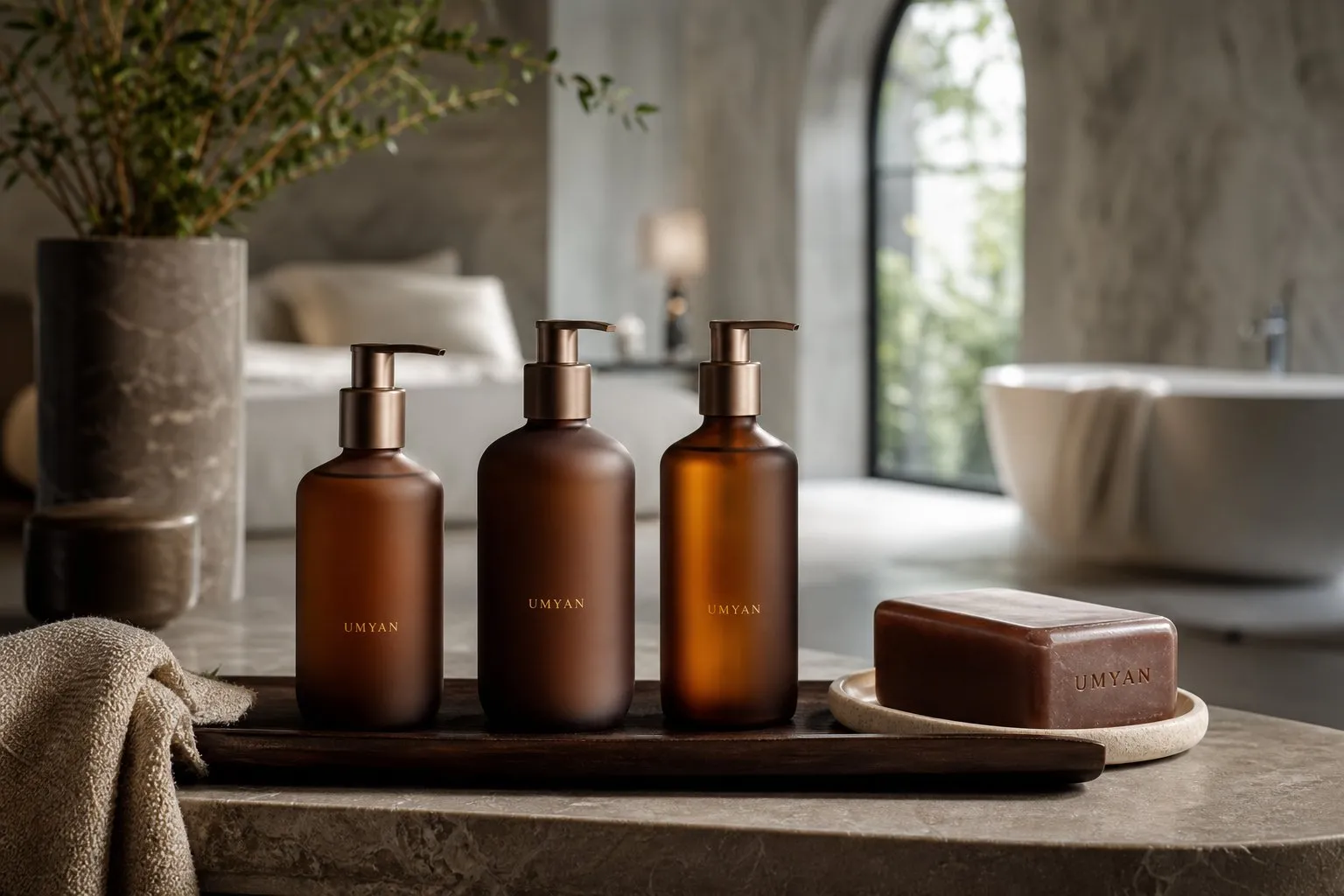
If you’re sourcing hotel amenities, the trail almost always leads to China — it’s where the large majority of the world’s hotel toiletries and kits are made. The question isn’t whether to source from China, but how to buy from a real manufacturer instead of a middleman, and how to vet one from the other side of the world. This guide covers both.
We’re a manufacturer in Yangzhou, supplying 5,000+ hotels across 40 countries since 2013, so here’s the honest insider view on buying amenities from China. If you already know you want your own line, pair this with our private label hotel amenities guide.
Why hotel amenities are made in China
China combines the formula expertise, packaging supply chain, and production scale that hotel amenities need, in one place. Decades of specialization mean a mature ecosystem: chemists, bottle and tube molders, paper and kit packaging, and fragrance houses all within reach of each other. That’s why the world’s hotel groups, from luxury to economy, source here — the combination of capability and cost is hard to match elsewhere.
Why Yangzhou (and Hangji in particular)
Within China, one region dominates hotel toiletries: Yangzhou, and specifically Hangji town. It’s the global hub for hotel amenity manufacturing, with a dense cluster of factories, material suppliers and skilled workers built up over decades.
Sourcing from the hub matters because the supply chain is on the doorstep — bottles, pumps, paper, fragrance and formula all nearby — which means faster development, better quality control and more competitive pricing than a factory operating in isolation. Our 10,000㎡ facility is in Hangji for exactly this reason.
Manufacturer vs trading company (the key distinction)
The single most important thing when buying from China: know whether you’re talking to a manufacturer or a trading company. A trading company resells a factory’s products at a margin, which costs you money and slows down anything technical. How to tell:
- Ask a formula question. A manufacturer answers instantly; a middleman says “I’ll check with the factory.”
- Ask to see the factory. Real manufacturers show you the lines, the cleanroom and the lab — by video if you can’t visit.
- Check the scale. A factory has production lines, a quality lab and R&D. We run 50 production lines, a 20-person R&D team and a class-100,000 GMPC cleanroom.
For the full vetting process, see how to choose a hotel amenities supplier.
What to look for in a Chinese manufacturer
Beyond manufacturer-vs-middleman, vet on:
- Certifications with numbers — ISO 9001, GMPC, FDA and GRS at the factory, plus FSC and RSPO at the material level (supplier-held). See our certifications.
- R&D and formula capability — can they develop a custom formula and scent, or only relabel?
- Capacity — can they handle your volume and a multi-property rollout? Ours is 150,000 sets a day.
- Export experience — do they already ship to your region and understand its compliance?
- Fragrance partnerships — we develop fragrance with Givaudan, which matters for a signature scent.
Buying tip: Buying direct from the manufacturer removes the trading-company margin and gives you direct control over formula, quality and timeline. The one thing to plan for when buying direct is lead time on custom development — start early.
How to buy from overseas with confidence
You don’t need to fly to China to source well:
- Video-tour the factory and ask to see the actual lines and lab.
- Request certificate numbers and verify them.
- Get physical samples before any large order — never approve on a screen.
- Start with a defined spec so quotes are comparable.
- Confirm export and shipping terms up front.
Lead times, shipping and planning ahead
Buying from China is straightforward once you plan for the logistics. Two things to build into your timeline:
- Development time for custom work. A private-label order (your branding on a proven line) is quicker than a bespoke formula, scent or mold, which need development and sampling. Start months ahead of a new opening.
- Production and shipping. Sea freight is the norm for amenity volumes and takes time; air freight is faster but costlier and usually reserved for samples or urgent top-ups. Confirm Incoterms (who handles shipping, duties and insurance) up front so there are no surprises.
The properties that source from China smoothly are the ones that start early and define the spec clearly; the ones that struggle leave it late and rush both development and freight. New to the logistics? Our guide to importing hotel amenities from China breaks down FOB, CIF and DDP, quality control and customs.
Communication and time zones
A common worry is managing a supplier across time zones and languages. In practice, an export-experienced manufacturer runs an English-speaking sales and account team and is used to working with overseas buyers’ schedules. The thing to test early is responsiveness and technical depth: do they answer formula and compliance questions clearly and quickly? A manufacturer with real R&D will; a middleman won’t. For the full vetting approach, see how to choose a hotel amenities supplier.
Frequently asked questions
Where are most hotel amenities manufactured?
The large majority are made in China, with Yangzhou (Hangji town) as the global hub for hotel toiletries — it has the densest cluster of formula, packaging and fragrance suppliers in the industry.
How do I find a real hotel amenities manufacturer, not a trading company?
Ask a technical formula question and ask to see the factory by video or in person. A manufacturer answers product questions instantly and will show you the lines and lab; a middleman defers to “the factory.”
Is it cheaper to buy hotel amenities direct from a manufacturer in China?
Usually yes — buying direct removes the trading-company margin and gives you control over formula, quality and timeline. Plan for lead time on any custom development.
What certifications should a Chinese amenities manufacturer have?
ISO 9001, GMPC and FDA at minimum, plus GRS for recycled content — and FSC/RSPO at the material level from suppliers. Always ask for certificate numbers, and who holds each.
Want to deal directly with the manufacturer? Request a quote with your spec and room count, and you’ll work straight with our factory in Yangzhou — certifications, samples, realistic lead times and pricing, no middleman.