guides
Importing Hotel Amenities From China: A Buyer's Guide
UMYAN · Jun 12, 2026
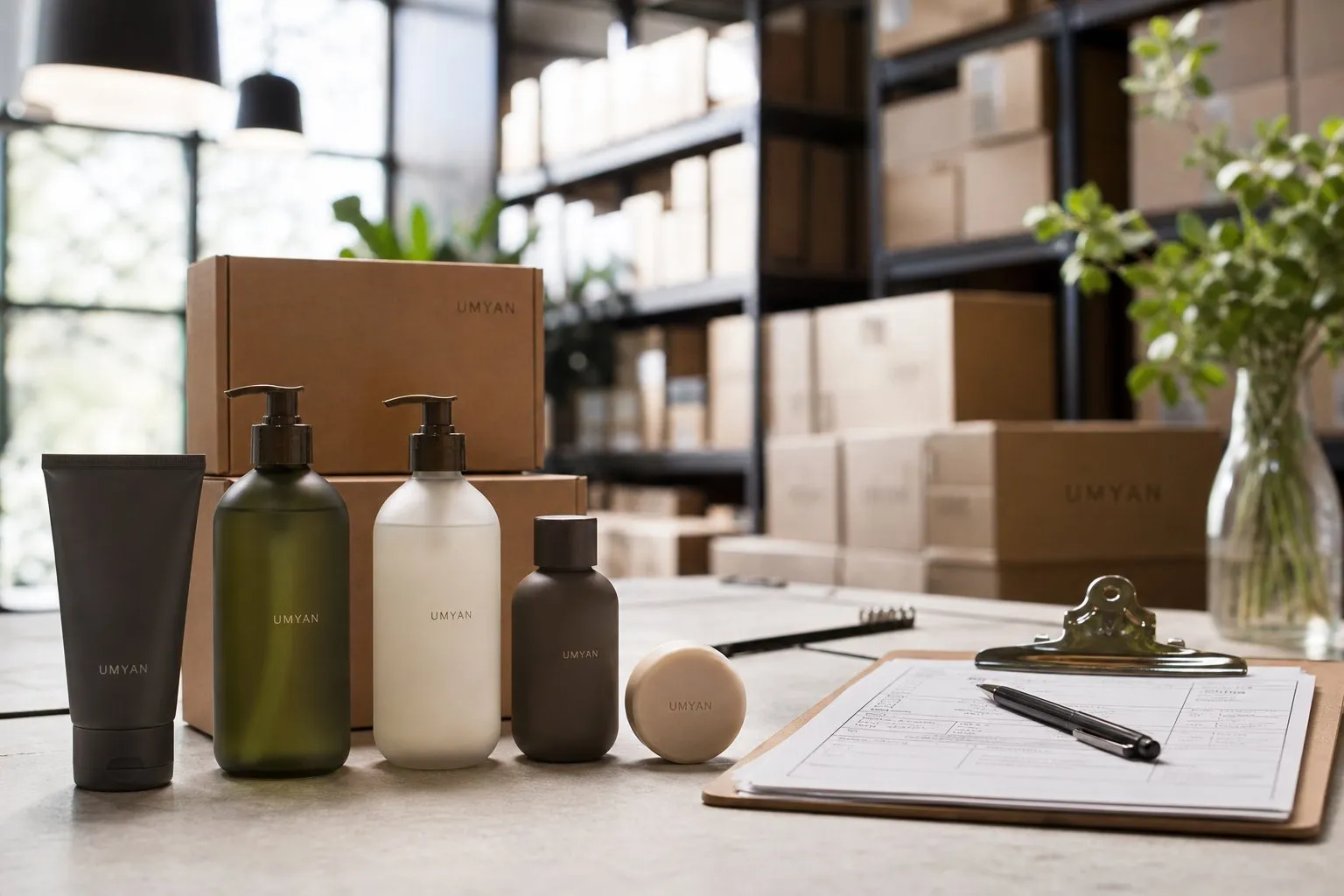
Importing hotel amenities from China is straightforward once you know the five steps: vet a real manufacturer, approve physical samples, agree price and Incoterms, control quality before shipment, and clear customs with the right paperwork. Skip any one of them and that’s usually where the problem shows up later.
We’ve shipped hotel amenities to buyers in 40 countries since 2013, so we’ve seen importing go smoothly and we’ve seen it go sideways. The good news: most of the risk is removable up front, with the right questions and the right terms. Here’s how to do it without surprises.
Step 1 — Vet a real manufacturer, not a middleman
The single biggest risk in importing is buying from a trading company that’s reselling someone else’s product with a markup and no control over quality. You want the factory.
Ask for, and verify:
- Certifications — for hotel toiletries the ones that matter are ISO 9001, GMPC and FDA (plus GRS for recycled content) held by the factory, and FSC and RSPO held at the material level by paper and ingredient suppliers. A real manufacturer shares copies of all of them. (See what each one means on our certifications page.)
- The factory itself — production lines, a cosmetic-grade cleanroom, in-house printing and embroidery. We run a 10,000㎡ factory in Yangzhou Hangji with a class-100,000 GMPC cleanroom; ask any supplier to show you theirs on a video call.
- Who actually makes it — if they can’t answer basic questions about formulation, filling or decoration, you’re talking to a reseller.
Buying tip: ask a supplier “which step do you outsource?” A real manufacturer answers plainly (most do everything in-house). A middleman gets vague. That one question saves a lot of due-diligence.
For the deeper version of this, our guide on choosing a hotel amenities manufacturer in China walks through the trust checks in detail.
Step 2 — Approve physical samples first
Never order production volume off a photo. Get physical samples — and for custom work, a pre-production sample with your label, formula and packaging exactly as it’ll run. Smell the fragrance, feel the slipper sole, check the print registration on the box.
Sampling is where you de-risk a custom program. If you’re doing private label or OEM, the sample is your contract: approve it, keep it, and hold the production run to it.
Step 3 — Agree price and Incoterms
This is where importing gets its reputation for confusion, but it’s just three common terms. Incoterms decide where the seller’s responsibility ends and yours begins.
| Term | Seller covers | You handle | Best when |
|---|---|---|---|
| FOB (Free On Board) | Goods to the port, loaded | Sea freight, insurance, import customs, duty, delivery | You have your own freight forwarder and want control |
| CIF (Cost, Insurance, Freight) | To your destination port, incl. freight + insurance | Import customs, duty, final delivery | You want it simpler but still clear customs yourself |
| DDP (Delivered Duty Paid) | Everything to your door, duty included | Receiving it | You want the simplest, hands-off option |
We can quote FOB, CIF or DDP depending on how much of the chain you want to run yourself. A distributor with a forwarder usually takes FOB for control; a hotel group that just wants boxes at the loading dock often prefers DDP.
What we won’t do is guess your duty rate or final landed cost — those depend on your country, the product’s HS code and current tariffs. Your customs broker (or we, on a DDP quote) will confirm them against your destination.
Step 4 — Control quality before it ships
Quality control belongs before the container leaves China, not after it arrives. Options, in order of cost:
- Pre-production sample sign-off (covered above) — your baseline.
- In-line / final inspection — check a sample of the finished goods against your approved spec before loading.
- Third-party inspection — an independent agency (SGS, Bureau Veritas, etc.) inspects on your behalf if you can’t.
For cosmetics specifically, the GMPC systems are what keep formula, fill and hygiene consistent batch to batch — which is why those certifications matter more than a nice catalog.
Step 5 — Paperwork and compliance
A clean shipment travels with clean documents. Typically that means a commercial invoice, packing list, bill of lading, and — for toiletries — supporting compliance documentation (INCI lists, certificate copies, and for the US market, formulas made to FDA-market requirements). Tell your supplier your destination market early so the formula and paperwork match it; fixing compliance after production is slow and expensive.
If you’re reselling, our wholesale and distributor terms are built for exactly this — factory-direct pricing with the documentation importers need.
Mistakes importers make
- Ordering production off a photo. Always approve a physical, pre-production sample.
- Treating FOB and DDP as the same price. They’re not — one excludes freight and duty, the other includes it. Compare quotes on the same Incoterm.
- Leaving compliance to the end. Declare your destination market up front so formula and documents are right the first time.
- No pre-shipment QC. It’s far cheaper to fix a problem on the factory floor than in your warehouse a month later.
- Buying from a reseller by accident. Verify certifications are in the maker’s own name and that production is in-house.
Frequently asked questions
Is it cheaper to import hotel amenities directly from China?
Usually, yes — buying factory-direct removes the trading-company and local-distributor markups. The savings are real on volume, but only if you account for freight, insurance, duty and QC. Comparing a factory’s DDP quote to your current landed cost is the honest way to see the difference.
What is the difference between FOB, CIF and DDP?
FOB means the seller gets the goods loaded at the port and you handle freight, customs and duty. CIF adds sea freight and insurance to the destination port. DDP means the seller delivers to your door with duty paid. More coverage means a higher quoted price but less work and risk for you.
What certifications should a Chinese hotel amenities supplier have?
For hotel toiletries: ISO 9001, GMPC and FDA (and GRS for recycled content) at the factory, plus FSC and RSPO at the material level from suppliers. Ask who holds each, with copies available on request.
How long does production and shipping take?
It depends on the product, the level of customization and your shipping route, so we confirm an exact timeline with your quote rather than promise a number that may not fit your order. Stock items move faster than fully custom private-label runs.
Can you handle customs and delivery to my country?
On a DDP basis, yes — we deliver to your door with duty paid. On FOB or CIF, you (or your freight forwarder) clear customs at destination. We’ll recommend the right option for your setup.
Planning to import? Tell us your destination market, the products and volumes, and whether you want FOB, CIF or DDP — and we’ll prepare a quote with the terms and documentation spelled out, usually within one business day.